

By Mark Lowe
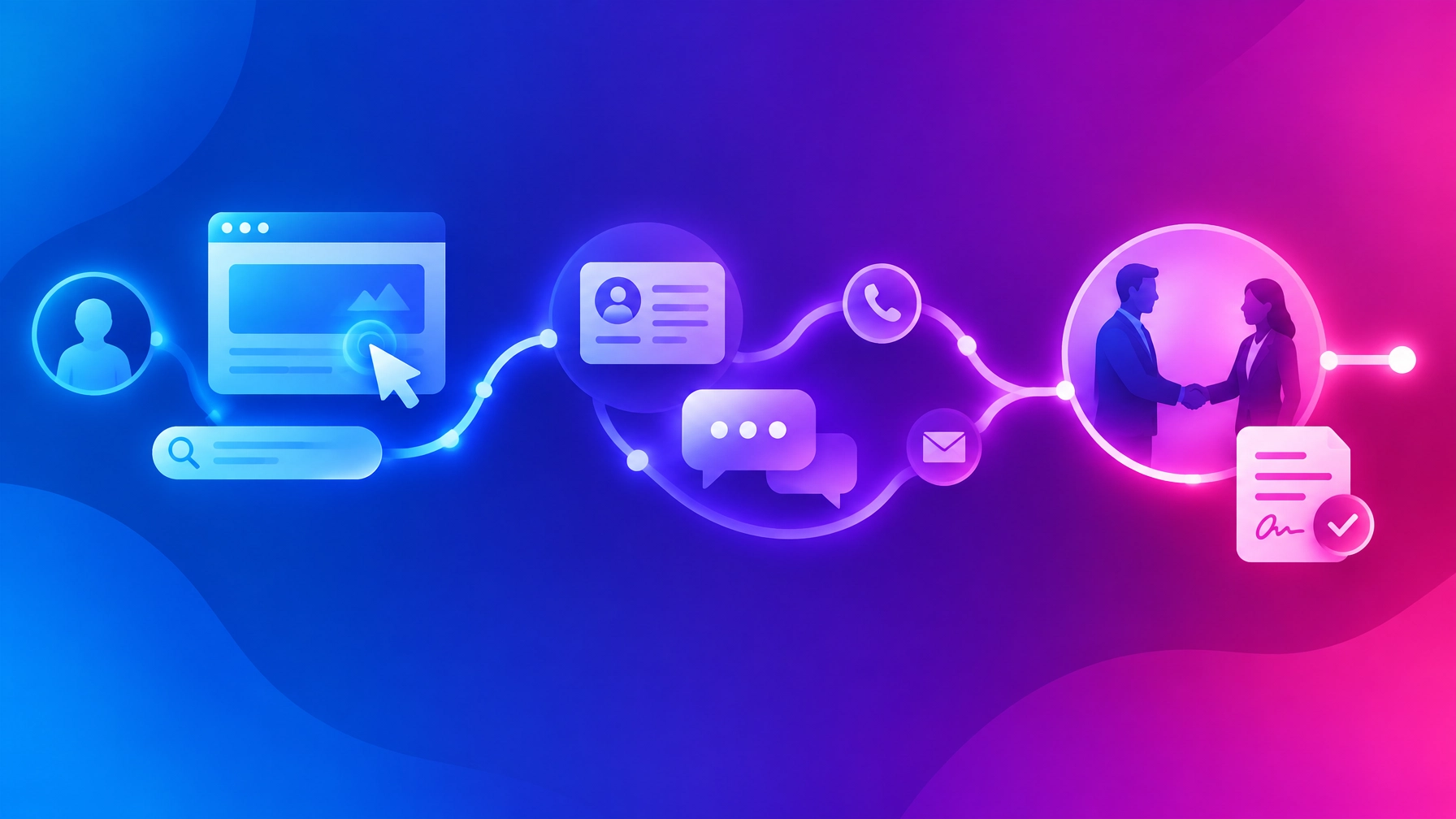
B2B marketing funnels rarely convert through one page, one message, or one sales conversation.
A prospect may discover your business through search, return several times, read an article, share it with a colleague, review your services, and contact you weeks later. Several people may influence the decision before anyone submits a form.
That makes B2B different from many consumer purchases.
The buying cycle is longer. The stakes are higher. More decision-makers are involved. Conversion is often sales-assisted rather than immediate.
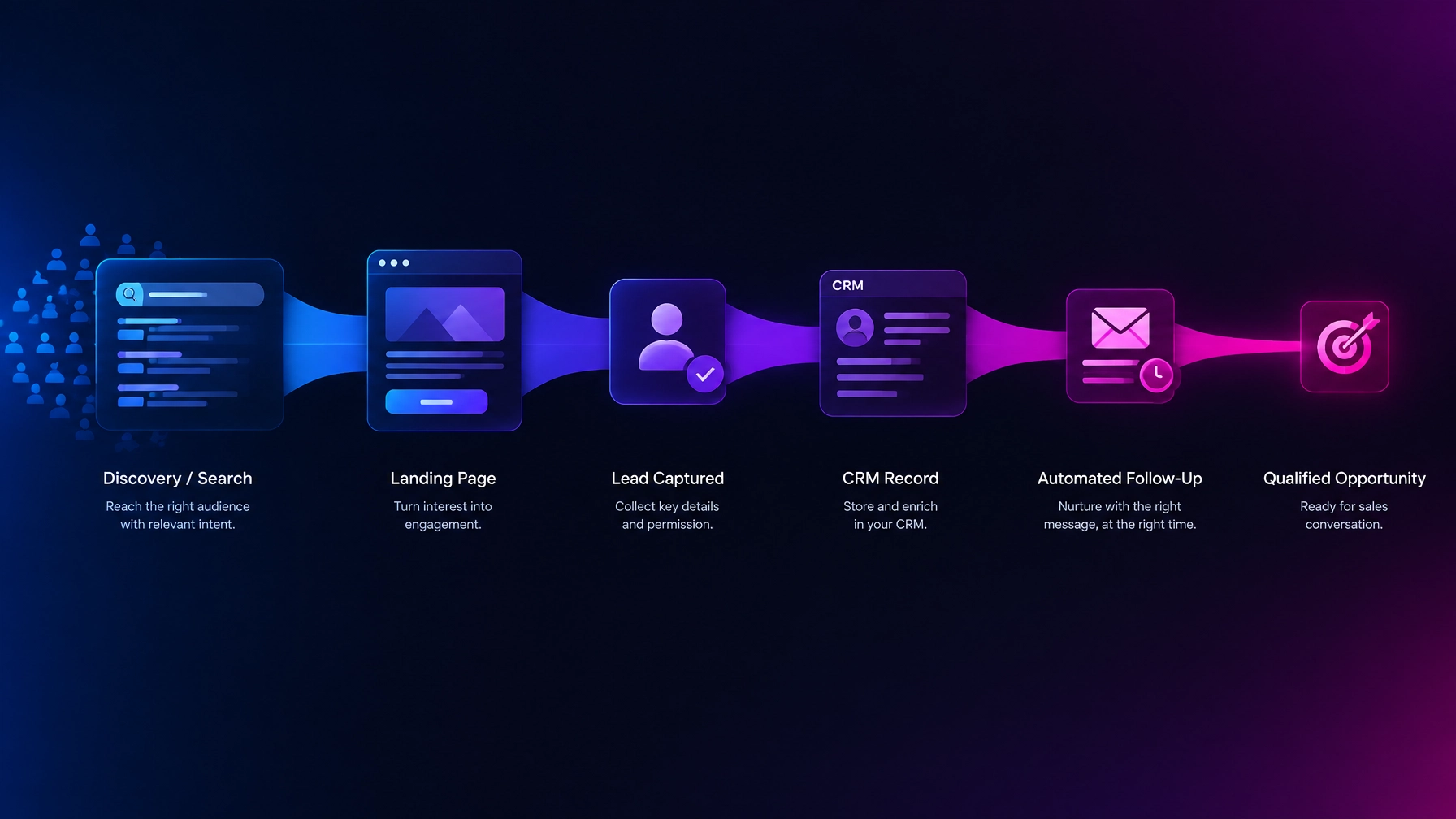
A strong funnel gives that journey structure. It creates clear next steps, supports useful follow-up, and shows your team where improvement is needed.
Less noise. More direction.
What makes a B2B funnel different?
A consumer funnel may guide one person from awareness to purchase in a short period. A B2B funnel usually supports a group of people through research, evaluation, internal discussion, approval, and implementation, often across a buying group rather than one decision-maker, as noted by Forrester and 6sense.
The funnel must account for:
- Longer decision cycles
- Multiple stakeholders
- Higher perceived risk
- Different questions at different stages
- Sales conversations and proposals
- Follow-up after the first conversion
- CRM tracking across the entire journey
The goal is not to force every visitor toward a sales call immediately. The goal is to match the next step to the buyer’s level of certainty.
Your B2B customer journey provides the context. Your funnel turns that journey into a clearer path.
Step 1: Define the buyer and the conversion goal
Start with the customer, not the software.
Define the type of company you want to attract, the problems it faces, and the people involved in making a decision. A founder, marketing leader, finance stakeholder, and technical reviewer may all need different information.
Then define one primary conversion goal for the funnel.
Examples include:
- Request a consultation
- Book a strategy call
- Download a practical guide
- Request a proposal
- Register for a webinar
- Apply for a service
- Start a qualified sales conversation
A funnel can include secondary actions, but the primary next step should be clear.
If every page asks visitors to book, download, subscribe, compare, and call at the same time, the journey becomes harder to understand.
One primary goal. One clear next step.
Step 2: Map stages to buyer behavior
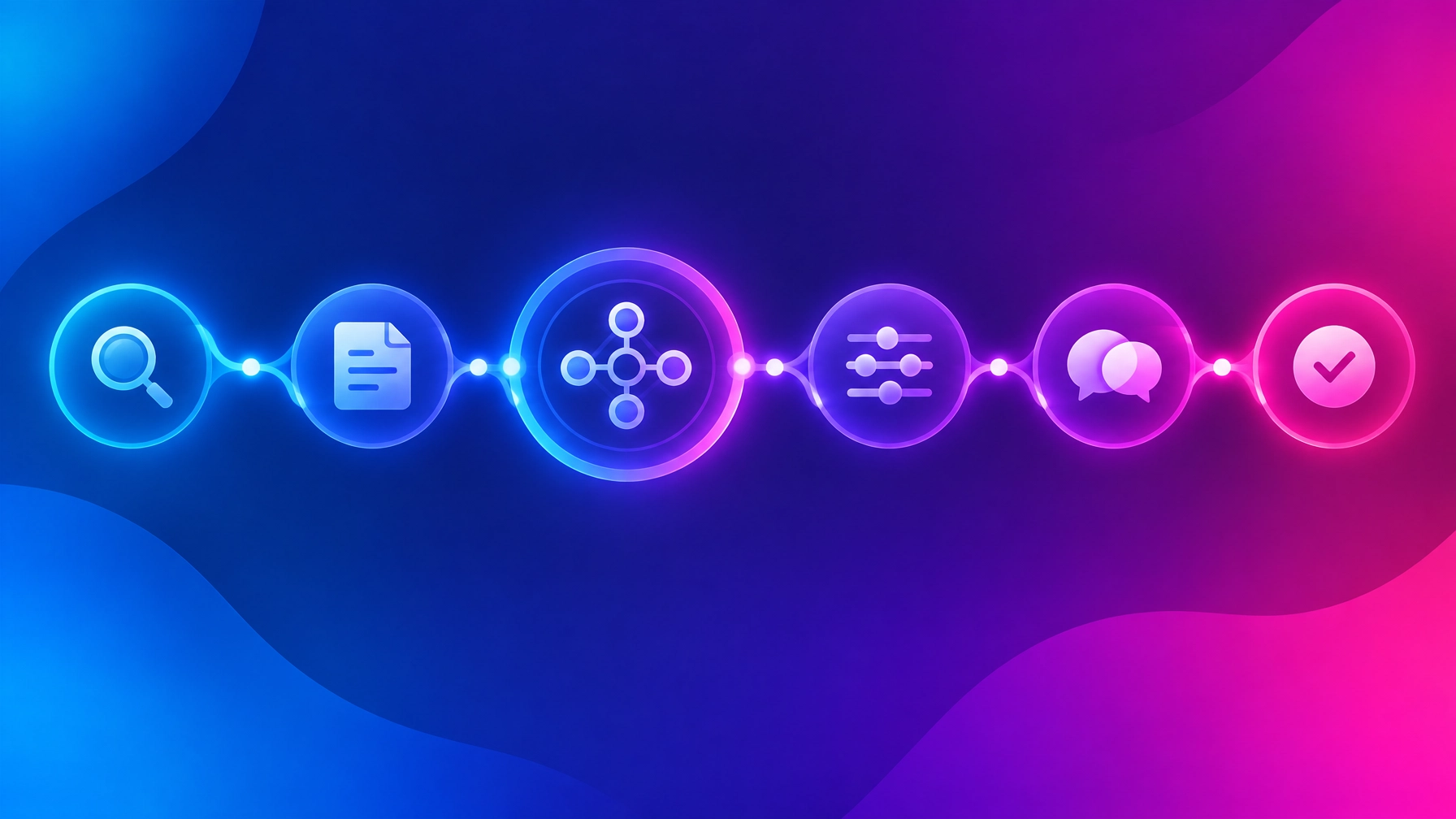
A useful B2B funnel reflects what the buyer is trying to accomplish at each stage.
Awareness: “I need to understand the problem.”
The buyer may be searching for symptoms, causes, or possible approaches. They may not yet know which service category applies.
Support this stage with:
- Educational articles
- Search-optimized resources
- Practical checklists
- Problem-focused guides
- Clear explanations of common challenges
Search visibility brings qualified people into the journey. Content helps them understand what deserves attention.
As search behavior changes, your content should remain clear enough to support traditional search and AI-assisted discovery. Our guide to how AI search is rewriting SEO explains why useful, well-structured content remains central to visibility.
Consideration: “Which approach is right for us?”
The buyer is comparing options, vendors, and possible solutions. Other stakeholders may now enter the process.
Support this stage with:
- Service pages
- Detailed guides
- Case studies
- Comparison content
- Implementation explanations
- Role-specific proof
The buyer needs more than a description of what you do. They need to understand whether your approach fits their goals, resources, systems, and timeline.
Evaluation: “Can we trust this decision?”
The buyer is building confidence and internal alignment.
Useful content includes:
- Clear process explanations
- Relevant results
- Testimonials and proof
- Frequently asked questions
- Proposal or consultation pages
- Information about timing and next steps
At this stage, clarity reduces perceived risk. The buyer should not have to reconstruct your offer from scattered pages and disconnected messages.
Conversion: “Let’s discuss the next step.”
The conversion may be a form submission, booked call, proposal request, or direct conversation.
This is not the end of the funnel. It is the point where your systems and people must work together.
A high-intent action should create a record, preserve context, assign ownership, and trigger an appropriate response.
Step 3: Build the landing page around one offer
A landing page should make the next decision easier.
Strong pages answer three questions quickly:
- What is being offered?
- Who is it for?
- What should the visitor do next?
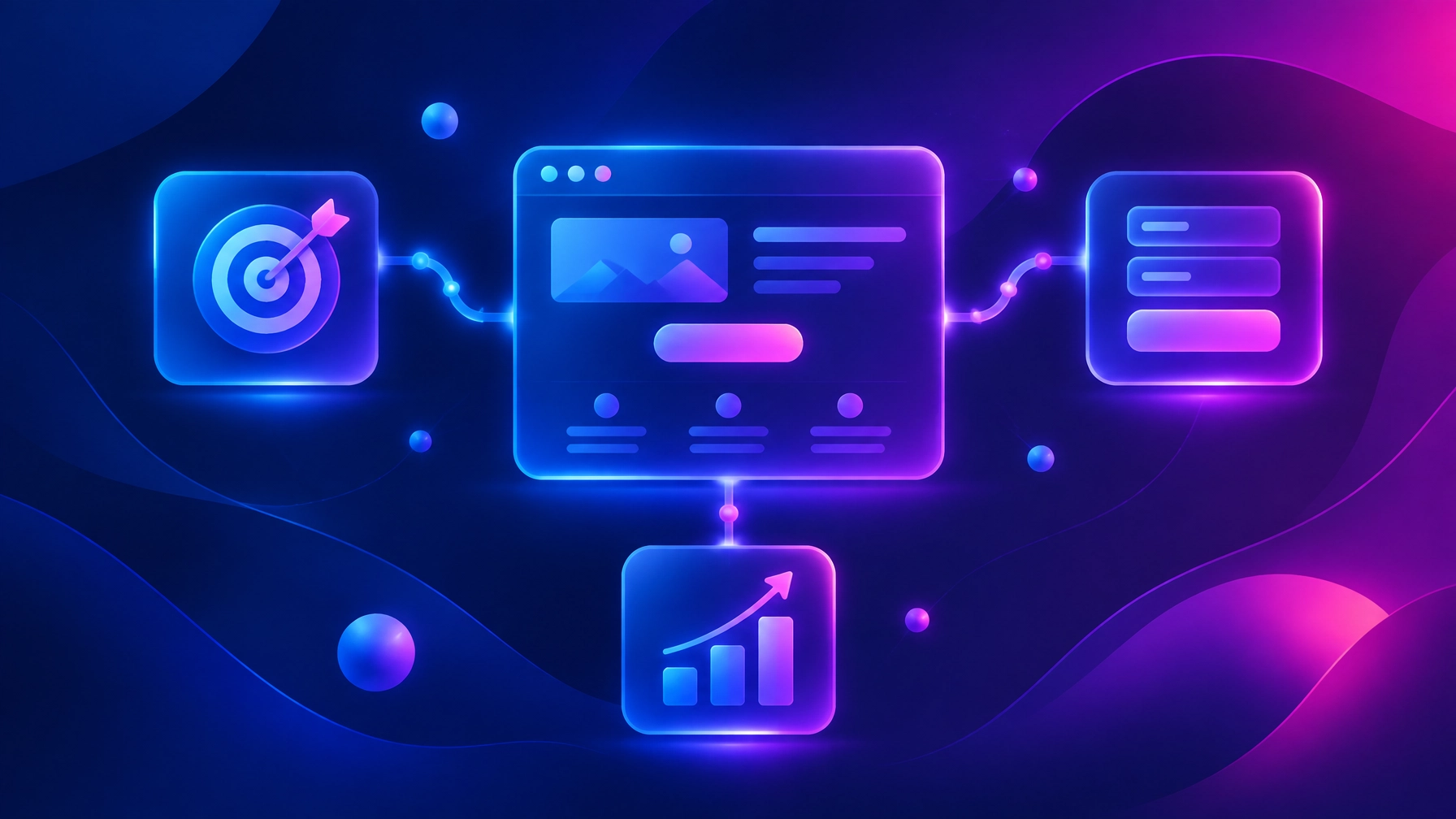
Your headline should communicate a specific outcome rather than a broad promise. Your supporting copy should explain the problem, the approach, and the value of taking action now.
Keep the page focused with:
- One primary offer
- One dominant call to action
- Clear benefits
- Relevant proof
- A concise form
- Minimal navigation distractions
- A strong mobile experience
The right form length depends on the action. A low-commitment resource may require only an email address. A consultation request may justify fields for company, role, need, and timing. Baymard Institute has found that perceived effort and high-friction fields often matter more than raw field count alone, so the goal is not simply to make every form shorter. It is to make the next step feel clear, proportionate, and easy to complete.
Ask only for information that supports the next step.
This is the practical foundation of high-converting landing pages. The page should look refined, but its main job is to remove confusion and friction.
Step 4: Find the biggest drop-off point
Do not optimize every part of the funnel at once.
First, identify where meaningful progress slows.
Review the movement between stages:
- Visitor to engaged visitor
- Visitor to lead
- Lead to qualified lead
- Qualified lead to sales conversation
- Conversation to opportunity
- Opportunity to customer
A high volume of visitors with few inquiries may indicate unclear messaging, weak calls to action, or a mismatch between traffic and offer.
Many inquiries with few qualified conversations may indicate poor targeting or an unclear qualification process.
Strong opportunities with few closed deals may point to proposal quality, stakeholder alignment, sales follow-up, or perceived risk.
Look for the largest commercially meaningful gap. That is usually the best place to begin conversion rate optimization.
Test one meaningful variable at a time:
- Headline
- Offer framing
- CTA language
- Form length
- Proof placement
- Page structure
- Follow-up sequence
Small changes can create useful improvement when they address the actual bottleneck.
Step 5: Connect the funnel to CRM and automation
A funnel does not end when someone fills out a form.
The conversion should pass useful information into your CRM, including:
- Name and contact details
- Company
- Source and campaign
- Converting page or offer
- Stated need
- Lifecycle stage
- Assigned owner
- Next action
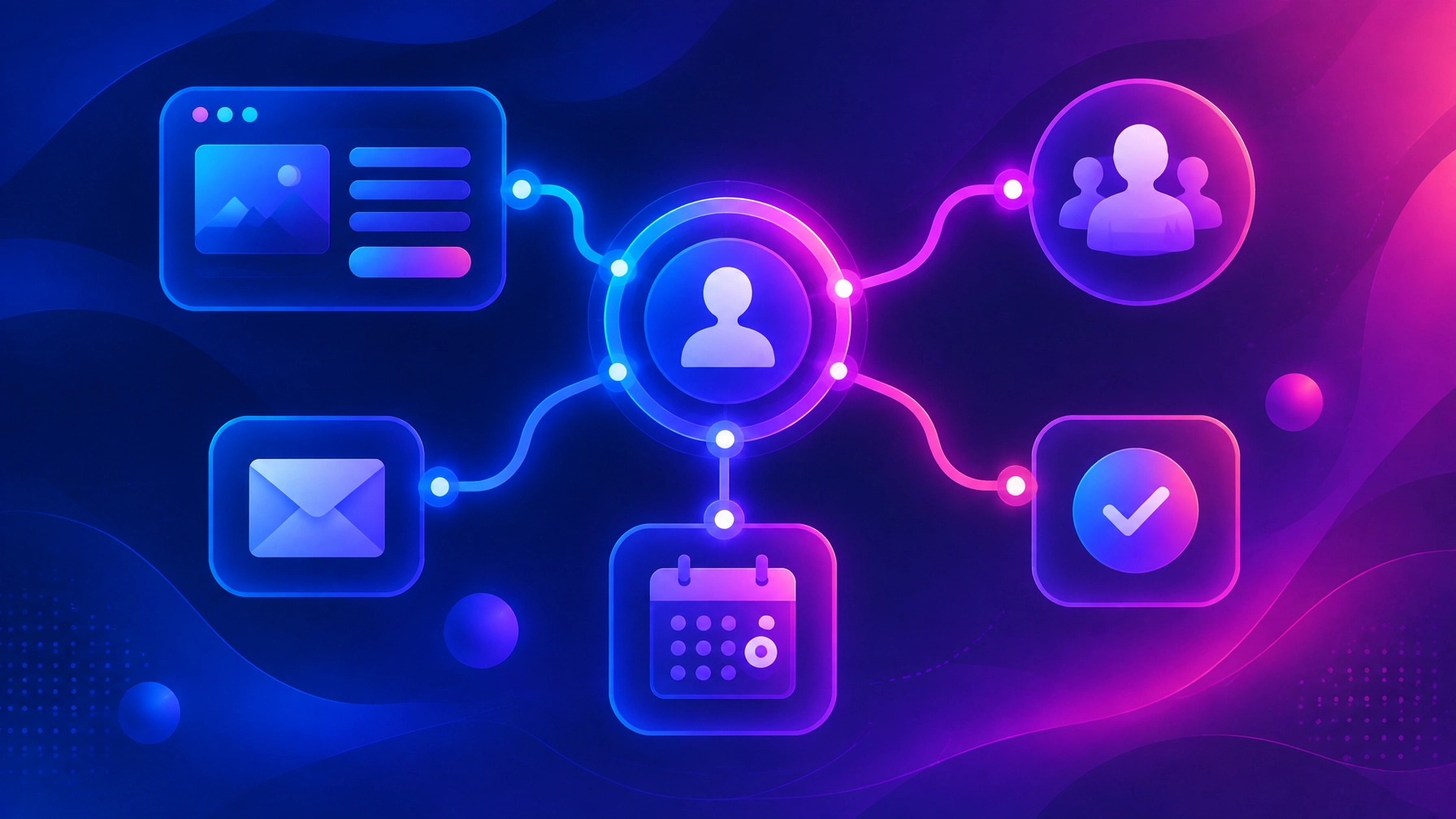
Then define what happens next.
A consultation request might trigger:
- Immediate confirmation
- Calendar or scheduling instructions
- CRM record creation or update
- Assignment to the appropriate team member
- Internal notification
- A follow-up task
- A relevant nurture path if the meeting is not booked
Automation should create consistency without replacing judgment. A high-intent lead still needs a thoughtful human response.
This is where marketing systems integration becomes important. The website, funnel, CRM, automation, and reporting do not need to operate as separate projects. They should support one customer journey.
Step 6: Design the handoff clearly
Marketing and sales should agree on what happens when a lead becomes ready for a conversation.
Define:
- What qualifies a lead
- Who owns the record
- How quickly the response should occur
- What information sales receives
- What happens if the prospect does not respond
- When a lead returns to nurture
A lead should not disappear into a shared inbox or wait for someone to remember the next action. That delay has a measurable cost. In the often-cited 2011 Harvard Business Review analysis, companies that responded to leads within an hour were far more likely to qualify them than those that waited longer.
Clear handoffs protect momentum. Our guide to marketing handoff problems covers the common gaps that cause qualified opportunities to stall.
Your broader marketing infrastructure should make ownership, stage movement, and follow-up visible.
Step 7: Measure performance beyond vanity metrics
Traffic, impressions, and form fills provide context. They do not tell the complete story.
A stronger measurement framework tracks movement toward revenue.
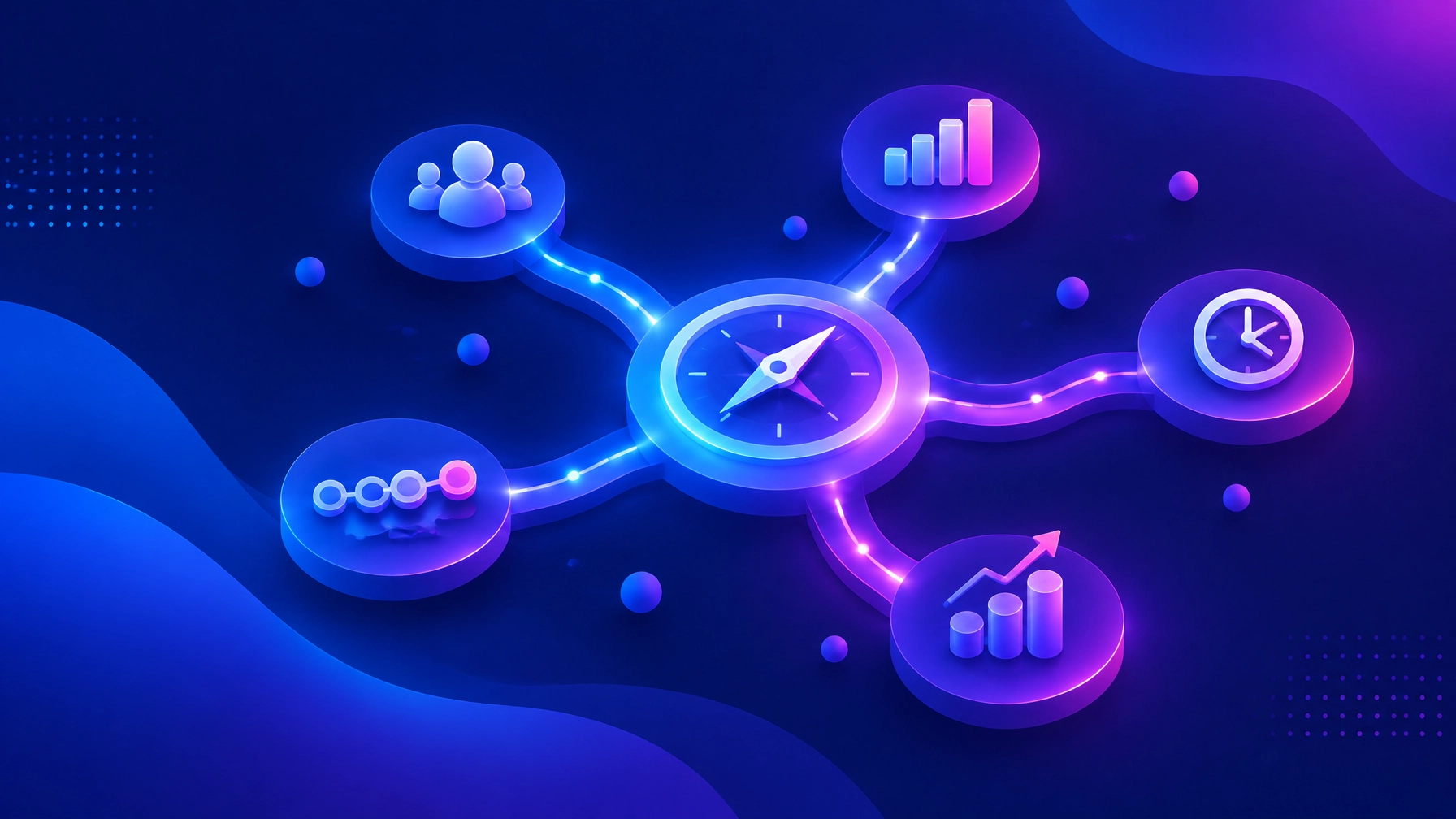
Visibility metrics
- Qualified organic traffic
- Relevant search visibility
- Returning visitors
- Content engagement
- Assisted conversions
Funnel metrics
- Landing page conversion rate
- Visitor-to-lead rate
- Lead-to-qualified-lead rate
- Cost per qualified lead
- Form abandonment rate
Sales metrics
- Response time
- Qualified lead acceptance rate
- Qualified lead-to-opportunity rate
- Opportunity-to-customer rate
- Sales cycle length
- Pipeline value
Business metrics
- Closed-won revenue
- Customer acquisition cost
- Revenue by source
- Revenue by campaign
- Retention and expansion
Use attribution as a guide rather than an absolute answer. B2B buyers interact with many channels before making a decision. Combine system data with sales feedback, customer interviews, and regular funnel reviews.
Build the funnel in phases
You do not need to rebuild your entire marketing operation at once.
A practical sequence is:
- Define the buyer and primary offer.
- Map the stages and buyer questions.
- Create the landing page and conversion path.
- Connect forms to the CRM.
- Automate confirmation and internal routing.
- Document the sales handoff.
- Add reporting for stage movement.
- Improve the largest drop-off point.
This approach creates progress without unnecessary complexity.
Holly Acre Media builds websites, funnels, visibility, content, CRM, automation, and marketing infrastructure as connected parts of one system. Explore our marketing services if your funnel needs a stronger foundation, or contact the team to discuss your current path from visibility to conversion.
Final thoughts
Marketing funnels that convert are not built around pressure.
They are built around clarity.
The right buyer finds a relevant message. The next page answers the next question. The offer matches the buyer’s level of readiness. The CRM preserves context. Automation supports follow-up. Sales receives a clear handoff. Reporting shows where to improve.
That is how a funnel becomes more than a sequence of pages.
It becomes a connected path from attention to opportunity.
Frequently asked questions
What is a B2B marketing funnel?
A B2B marketing funnel is a structured path that guides business buyers from initial awareness through research, evaluation, conversion, sales follow-up, and purchase.
How is a B2B funnel different from a consumer funnel?
B2B funnels usually involve longer buying cycles, multiple decision-makers, higher perceived risk, and sales-assisted conversions. The funnel must support education, internal alignment, qualification, and follow-up.
What should a B2B landing page include?
A B2B landing page should include a clear offer, a specific value proposition, relevant benefits, trust signals, one primary call to action, and a form that requests only useful information.
What should happen after a funnel conversion?
The conversion should create or update a CRM record, capture source and offer information, assign ownership, send confirmation, and trigger the appropriate follow-up or nurture sequence.
How do you improve a marketing funnel?
Start by measuring conversion between stages. Identify the largest meaningful drop-off, then test the related message, offer, page, form, handoff, or follow-up process.
What metrics matter most for B2B marketing funnels?
Important metrics include qualified lead rate, response time, stage-to-stage conversion, opportunity creation, pipeline value, sales cycle length, closed-won revenue, and customer acquisition cost.