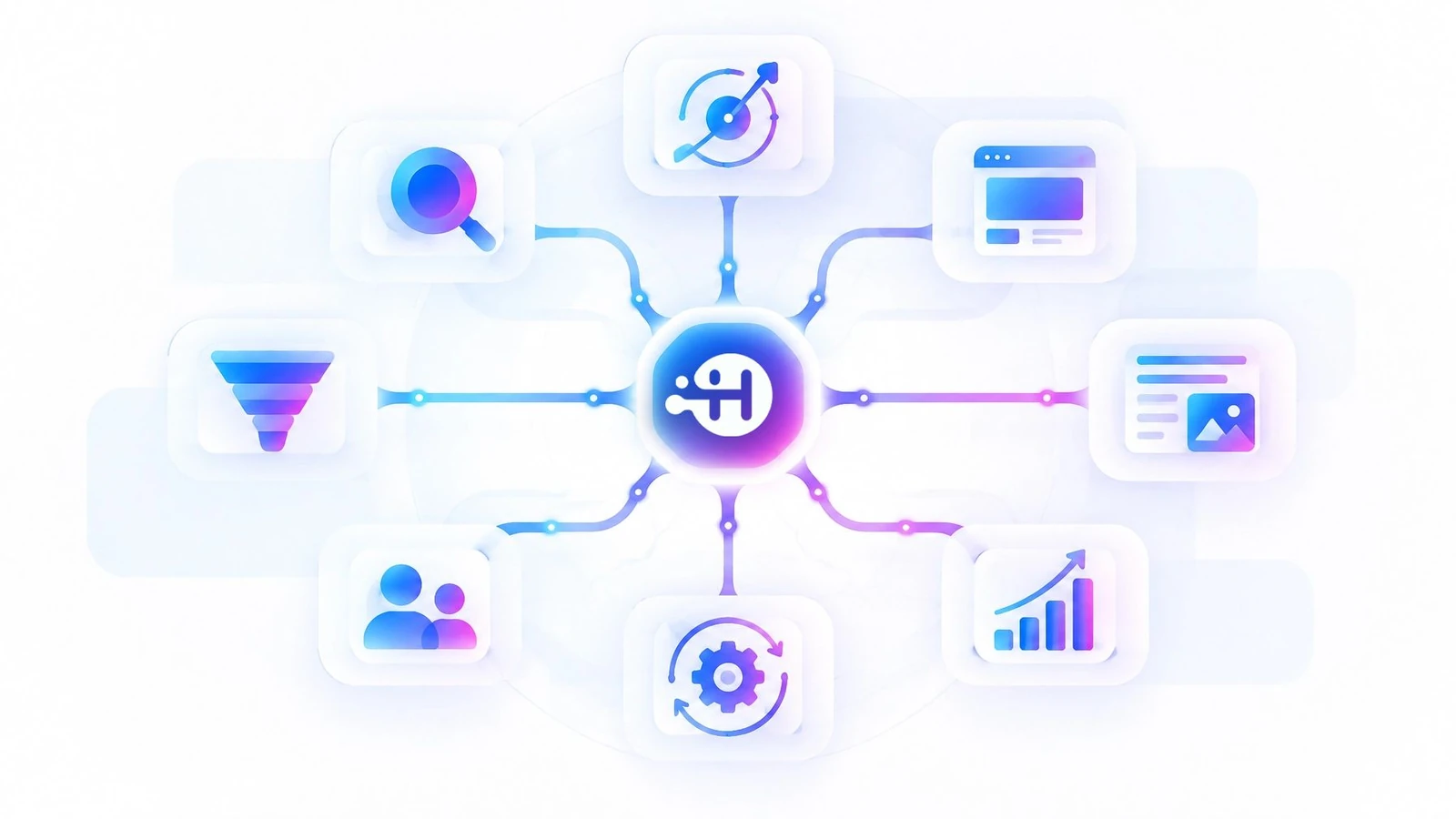



Most businesses aren’t losing customers because their product is wrong. They’re losing them because the path to purchase is confusing, disjointed, or full of dead ends. Customer journey mapping is the process of visualizing every touchpoint a prospect has with your brand, from first impression to loyal advocate, so you can identify exactly where momentum builds and where it stalls. Done well, it turns scattered marketing activity into a connected system that actually converts.
If you’ve ever wondered why your ads get clicks but not sales, or why your website gets traffic but not leads, the answer usually lives somewhere inside your customer journey. This guide breaks down what journey mapping actually is, why it matters more than ever, and how to build one that drives real results.
What Is Customer Journey Mapping?
Customer journey mapping is a visual framework that outlines every stage a customer moves through when interacting with your brand, from initial awareness to post-purchase loyalty. It captures their actions, emotions, questions, and pain points at each stage, giving you a clear picture of where your marketing is working and where it’s leaking potential revenue.
Think of it as the difference between guessing and knowing. Instead of assuming your funnel works because leads “seem” to be coming in, a journey map shows you precisely where prospects engage, where they hesitate, and where they disappear entirely. For business owners juggling multiple vendors and disconnected tools, this clarity is often the missing piece that turns fragmented marketing into a scalable growth system.
Why It’s Different From a Sales Funnel
A sales funnel tracks the stages of a transaction. A customer journey map tracks the human experience behind those stages. The funnel tells you a lead moved from “aware” to “consideration.” The journey map tells you why they moved, what content convinced them, what almost made them leave, and what emotional trigger finally got them to convert.
Both matter, but the journey map is the strategic layer that makes the funnel actually perform.
Why Customer Journey Mapping Matters for Conversions
Journey mapping matters because most conversion problems aren’t visibility problems, they’re experience problems. You can drive thousands of visitors to a page, but if the messaging doesn’t match their mindset at that stage, they’ll bounce. Mapping the journey exposes these mismatches before they cost you revenue.
Businesses that map their customer journey typically see three concrete benefits:
- Fewer drop-off points, because friction is identified and removed at each stage
- More consistent messaging, because every touchpoint is aligned to a specific customer mindset
- Higher-quality follow-up, because you know exactly what a prospect needs to hear next
This is especially critical for brands that feel like they’re doing “everything right” (ads, SEO, social, email) but still aren’t seeing proportional results. Often, the individual pieces are fine. It’s the connections between them that are broken.
The Core Stages of a Customer Journey Map
Every customer journey map includes the same foundational stages, even though the specific touchpoints will vary by business. Understanding these stages is the first step to building a map that actually reflects your customers’ real behavior.

1. Awareness
This is the moment a prospect first discovers your brand exists, often through search, social media, referrals, or paid ads. At this stage, they don’t know you yet, so trust and clarity matter more than sales pitches. Strong SEO and a clear brand presence do the heavy lifting here.
2. Consideration
Here, prospects are actively comparing options and evaluating whether you can solve their problem. This is where content, case studies, and a genuinely persuasive website earn their trust. A confusing or slow website at this stage is often where deals quietly die, which is why high-converting landing page fundamentals matter so much at this exact point in the journey.
3. Decision
This is the moment of commitment, where a prospect chooses to buy, book a call, or sign up. Friction here (a clunky checkout, an unclear CTA, a form that asks too much) can undo weeks of good marketing in seconds. This stage lives or dies on conversion-focused design and messaging.
4. Retention and Advocacy
The journey doesn’t end at the sale. What happens after purchase determines whether a customer becomes a repeat buyer or a one-time transaction. Reliable follow-up, automation, and CRM systems keep the relationship alive long after the initial conversion, which is why optimized CRM management is often the unsung hero of long-term growth.
How to Build a Customer Journey Map: A Step-by-Step Process
Building a customer journey map means combining real customer data with a clear visual framework across every stage of interaction. Here’s the process broken into actionable steps.
Step 1: Define Your Customer Personas
Start by identifying who is actually moving through your journey, not who you assume is moving through it. Pull from CRM data, sales conversations, and analytics to build 2-3 realistic personas with real motivations, objections, and triggers.
Step 2: Identify Every Touchpoint
List every place a prospect might interact with your brand: search results, social posts, ads, your website, emails, follow-up calls, and even reviews. Missing a touchpoint means missing a potential leak in your funnel.
Step 3: Map Emotions and Questions at Each Stage
For each touchpoint, ask what the customer is thinking and feeling. Are they confused? Skeptical? Ready to buy? This is what separates a real journey map from a simple flowchart, because it reveals why people act, not just what they do.
Step 4: Identify Gaps and Friction Points
This is where most businesses discover the truth: it’s rarely one big problem, it’s several small ones stacking up. A slow-loading page here, an inconsistent message there, a missed follow-up email somewhere else. Each gap chips away at conversions.
Step 5: Align Your Marketing Infrastructure to the Map
Once you know the journey, every asset (your website, your ads, your CRM, your copy) should be built to serve a specific stage. This is where fragmented marketing efforts finally become one connected growth system instead of a pile of disconnected tactics.
Common Mistakes That Undermine Journey Mapping
The most common mistake is building a journey map once and never revisiting it, treating it as a static document instead of a living strategy. Customer behavior shifts, platforms evolve, and buying patterns change, especially with how quickly discovery habits are moving toward AI-driven search. A map built in 2023 may no longer reflect how customers are finding you in 2026.
Mistake: Mapping the Journey You Wish Customers Took
It’s tempting to map the “ideal” path, but real customers rarely move in a straight line. They bounce between stages, get distracted, compare competitors, and come back weeks later. A useful map reflects reality, backed by analytics and CRM data, not assumptions.
Mistake: Ignoring Post-Search Discovery Channels
Increasingly, customers are discovering brands through AI-generated answers and summaries, not just traditional search results. If your journey map only accounts for classic SEO touchpoints, you’re missing a growing entry point. This is exactly why AEO (Answer Engine Optimization) has become critical to modern journey mapping, since it determines whether your brand even shows up at the very first stage of awareness.
Mistake: Treating Each Channel as Its Own Silo
When your website, ads, email, and social messaging aren’t coordinated, customers experience whiplash instead of clarity. Consistency across every touchpoint isn’t a nice-to-have, it’s what makes a journey feel trustworthy enough to convert.
Turning Your Journey Map Into a Growth System
A journey map is only valuable if it’s actually implemented across your marketing infrastructure, not filed away after a single workshop. This means your website copy, your funnel structure, your automation sequences, and your follow-up systems all need to reflect the map’s insights simultaneously, not in isolation.
This is where many business owners hit a wall. Mapping the journey is one thing, but rebuilding a website, restructuring a funnel, and fixing broken automation all at once is a heavy lift for an internal team already stretched thin. Whether you tackle it yourself or bring in a strategic partner depends on your bandwidth, timeline, and how quickly you need results. If you’re ready for the latter, Holly Acre Media’s services are built specifically to turn journey insights into a connected system spanning funnels, websites, automation, and copy that sounds human.
Less noise. More momentum. One connected growth system, one strategic partner, instead of five disconnected vendors trying to patch the same leaks.
Frequently Asked Questions
What is customer journey mapping in simple terms?
Customer journey mapping is a visual outline of every step a customer takes when interacting with your brand, from first discovering you to becoming a loyal customer. It highlights what they’re thinking, feeling, and doing at each stage so you can improve the experience and increase conversions.
How often should a customer journey map be updated?
A journey map should be reviewed at least twice a year, or whenever there’s a major shift in your marketing channels, website, or customer behavior. Since discovery habits are evolving quickly with AI search, more frequent reviews are becoming the norm for competitive brands.
What’s the difference between a customer journey map and a sales funnel?
A sales funnel tracks the transactional stages of a purchase, while a customer journey map tracks the emotional and behavioral experience behind those stages. The funnel shows what happens; the journey map shows why it happens.
Do small businesses really need customer journey mapping?
Yes, arguably more than larger businesses, since small teams can’t afford wasted ad spend or disjointed messaging. A clear journey map helps small businesses prioritize the highest-impact fixes instead of spreading resources thin across every channel at once.
What tools are used to build a customer journey map?
Most journey maps are built using a combination of analytics platforms, CRM data, and simple visual tools like flowcharts or whiteboards. The tool matters less than the accuracy of the data feeding it, which is why clean CRM management is such a critical foundation.