


You may have steady website traffic but few qualified opportunities. Or leads may come in, then go cold while they wait for someone to follow up.
That can feel like a channel problem. Often, it is a connection problem.
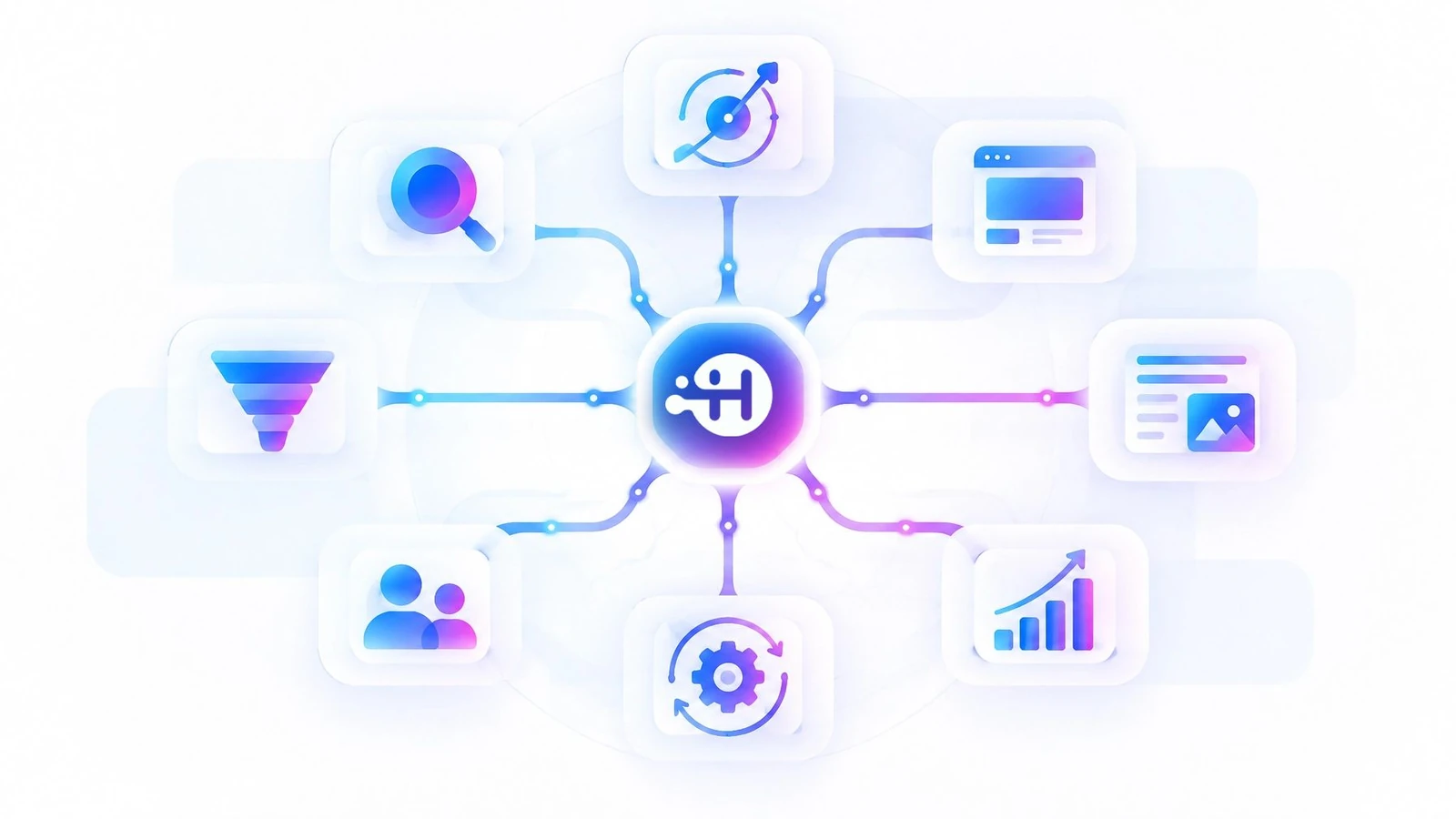
Visibility, website experience, lead qualification, CRM, and follow-up each play a role. When they operate separately, opportunities can stall between steps. A connected B2B lead generation strategy gives each part a clear purpose and makes the next action easier to manage.
Lead generation is a connected journey
A practical strategy has three closely linked stages:
- Attract the right buyers through search visibility and useful content.
- Convert their attention with clear offers, focused pages, and thoughtful qualification.
- Follow up through CRM, automation, and consistent sales handoffs.
Each stage should pass useful context to the next. A visitor who becomes a lead should not have to start their story again. Your team should be able to see what prompted the inquiry, what the person needs, and who owns the next step.
That is the difference between collecting contacts and creating a dependable path to opportunity.
Attract the right buyers
Visibility matters most when it connects your business with people who have a relevant need. Search-optimized service pages, useful content, and clear answers to buyer questions can help your company become easier to find during research and evaluation.
The goal is not simply to increase traffic. It is to attract the people and organizations your offer can serve.
That distinction matters in B2B. In its 2025 B2B Buyer Experience Report, 6sense reported that the eventual winning vendor was already on buyers’ day-one shortlists in 95% of cases studied. The takeaway is practical: visibility and useful information should support the buyer’s research well before they are ready to speak with sales.
Search and content are important parts of the system, not the whole system. The next step must help interested visitors understand your offer and decide what to do.

Turn attention into qualified opportunities
A visitor may be interested and still need a clearer reason to take action. Your website and funnel should explain what you offer, who it is for, and what happens next.
Make the offer easy to understand
A focused offer gives buyers a useful next step. It might be a consultation, a demonstration, an assessment, or a relevant resource. Explain what the person will receive and how it relates to the problem they are trying to solve.
Avoid asking visitors to make several decisions at once. One primary call to action is easier to follow than a page crowded with competing options.
Reduce friction without losing useful context
A form should ask for information that supports the next step. A simple resource download may need only basic contact details. A consultation request may need a few additional details to route the inquiry appropriately.
Qualification can be built into the journey. Ask about company size, needs, timing, or service interest only when those details help your team prepare a relevant response.
This is where conversion rate optimization (CRO) principles help. Review where visitors drop off, whether the page answers common questions, and whether the next step feels proportionate to the value being offered. For more, see our guide to conversion rate optimization and the step-by-step overview of marketing funnels that convert.

Make follow-up part of the strategy
A form submission is a beginning, not a completed lead-generation process. If the inquiry lands in an inbox without clear ownership, a promising opportunity can lose momentum.
Your CRM and marketing automation should make the next steps visible:
- Record the inquiry and preserve its source, offer, and relevant context.
- Assign an owner based on clear routing rules.
- Send a timely confirmation that sets expectations.
- Create a task for the appropriate human follow-up.
- Continue relevant nurturing when a lead is not ready to speak.
- Record what happens next, from qualification through opportunity and outcome.
Response speed is one part of a good buyer experience. In a 2024 study of 1,000 B2B SaaS company websites, RevenueHero reported that only 365 companies responded to its test inquiries, with an average response time of 1 day, 5 hours, and 17 minutes among those that did. The study was conducted by a vendor and should be treated as an operational example, not a universal benchmark. Still, it highlights why clear ownership and reliable follow-up matter.
Automation can support consistency, but it should not replace a thoughtful response. Use it to acknowledge requests, route records, create reminders, and nurture contacts with relevant information. Let people handle context, judgment, and conversation.
Our guide to CRM and marketing automation explains how to build that follow-up engine.

Connect marketing and sales around shared definitions
Marketing and sales need a shared understanding of what makes a lead qualified. Otherwise, marketing may prioritize volume while sales is looking for fit, intent, and readiness.
Agree on a few practical definitions:
- Qualified lead: the criteria that indicate a contact or account fits your audience and merits a specific next step.
- Owner: the person or team responsible for responding.
- Response expectation: how quickly the team aims to acknowledge and follow up.
- Accepted or returned: what sales records after reviewing a lead, including why it may need more nurturing.
- Outcome: what happened after the conversation, such as an opportunity, a later follow-up, or no current fit.
These definitions turn handoffs into a process the teams can review and improve. They also help your CRM show more than activity. It can connect sources and campaigns to progression, pipeline, and business outcomes.
Measure across the journey, not just one channel at a time. Review which sources bring qualified inquiries, how leads progress, where delays occur, and which opportunities move forward. Use that view to guide adjustments to content, offers, routing, and follow-up.
For a practical approach to improving connections between your tools and processes, see the 30-day plan to connect your marketing systems. To establish a regular review rhythm, explore marketing operations strategy.
A practical starting framework for this quarter
You do not need to redesign every campaign or replace your tools at once. Start with one important path from first visit to sales follow-up.
- Choose a priority audience and offer. Be specific about who you want to reach and the useful next step you can offer them.
- Map the path. Write down how a buyer finds you, what they see, where they convert, and what happens afterward.
- Review the conversion point. Check whether the page explains the offer clearly, the form asks for appropriate details, and the next step is easy to understand.
- Define qualification and ownership. Agree on what makes an inquiry ready for sales and who responds.
- Connect the CRM workflow. Test that each inquiry creates or updates a record, retains context, and triggers the right confirmation and task.
- Review outcomes. Look at lead quality, follow-up completion, movement to opportunity, and where the journey needs improvement.
- Choose one improvement. Refine one meaningful part of the path, then review what changes.
This sequence creates a clear foundation without adding unnecessary complexity. It also gives your team a repeatable way to improve the system over time.
Build a stronger path from visibility to follow-up
B2B lead generation works best when its parts support one another.
Search visibility and content bring relevant buyers into the journey. Websites and funnels make the offer clear and guide the next step. CRM, automation, and marketing infrastructure preserve context, support consistent follow-up, and help teams learn from outcomes.
One channel cannot do that work alone. A connected system creates more direction from first discovery through qualified opportunity.
Holly Acre Media brings strategy, visibility, websites, funnels, content, CRM, automation, and ongoing improvement together as one coordinated marketing system. Explore our services or send us a message to discuss how your lead-generation path could become clearer and more dependable.