


LinkedIn for Business isn’t a nice-to-have anymore. It’s infrastructure. For founders and marketing teams tired of scattered, inconsistent efforts across five different platforms, LinkedIn offers something rare in 2026: a channel where visibility, credibility, and conversion can actually live in one place. Less noise. More momentum.
This playbook breaks down how to actually use LinkedIn for Business growth this year, not as another task on the to-do list, but as a strategic asset that compounds over time.
Why LinkedIn for Business Matters More in 2026
LinkedIn matters more in 2026 because it’s where decision-makers actually spend attention, and the algorithm now rewards depth over volume. B2B buyers, investors, and partners are researching people before they research companies. If your leadership team isn’t visible, credible, and consistent on the platform, you’re losing deals before the first call happens.
The platform has also matured past being a digital resume site. It’s now a legitimate demand-generation channel, especially for service businesses, consultants, and mid-sized brands that sell on trust. The businesses winning on LinkedIn right now aren’t posting the most. They’re posting the most strategically, with messaging that sounds human rather than corporate and polished to the point of feeling robotic.
The Shift from “Presence” to “System”
A LinkedIn presence is not the same as a LinkedIn system. Presence means you show up occasionally, post when inspiration strikes, and hope something lands. A system means every post, message, and profile element is working toward a defined funnel outcome, whether that’s booked calls, inbound leads, or brand authority that shortens your sales cycle.
Most businesses are stuck in “presence mode,” which is exactly why their efforts feel scattered despite the activity. A connected system fixes that. One platform. One strategy. Measurable movement.
Building the Foundation: Your Company and Personal Profiles
Your LinkedIn foundation is the combination of a sharp company page and strong personal profiles for your leadership team, and both need to work together, not separately. Treat your company page like a landing page, not a brochure, and treat your founder or executive profile like your highest-converting sales asset.
Optimizing Your Company Page
A company page should communicate what you do, who you help, and why it matters within three seconds of landing on it. That means a clear banner, a benefit-driven “About” section, and a call-to-action that points somewhere specific, not just “visit our website.”
Too many company pages read like internal mission statements instead of customer-facing pitches. Rewrite your “About” section with your buyer in mind: what problem do you solve, and what does working with you actually look like. If your copy is trying to do too much and saying too little, it may be worth revisiting through a professional copywriting lens to make sure the words are pulling their weight.
Turning Founder Profiles into Growth Engines
Founder and executive profiles typically outperform company pages because people trust people, not logos. The fix here is treating your personal profile headline, banner, and “About” section as a mini funnel: hook, credibility, and a clear next step.
This is where a lot of business owners stall out, because writing about yourself convincingly is genuinely hard. The strongest founder profiles read like a confident, third-person pitch, not a diary entry.
Content Strategy: What Actually Drives Growth on LinkedIn
The content that drives growth on LinkedIn for Business in 2026 is specific, opinionated, and rooted in real experience, not generic advice recycled from a thousand other posts. Algorithms and audiences alike reward posts that sound like a real person with a real point of view, not a content calendar filling a slot.
Content Pillars That Convert
A working content strategy typically rests on three to four repeatable pillars: proof (case studies, results, testimonials), perspective (opinions on industry trends), education (how-to breakdowns), and behind-the-scenes (process, culture, decision-making). Rotating through these keeps your feed varied without losing focus.
The mistake most businesses make is posting only promotional content, which trains the algorithm and your audience to tune you out. A 70/20/10 split, mostly value and perspective, some proof, a little promotion, tends to outperform anything more sales-heavy.
Consistency Beats Virality
Consistency beats virality when it comes to actually growing pipeline from LinkedIn for Business. One viral post might spike impressions for a week, but a steady publishing rhythm builds the trust that turns a scroll-past into a sales conversation.
Three to five posts a week from a founder or brand account, sustained over months, will outperform sporadic bursts of high-effort content every time. This is exactly the kind of “connected growth system” thinking that separates businesses with real momentum from those still guessing.
LinkedIn Ads: Precision Over Volume
LinkedIn ads work best as a precision tool for warm and mid-funnel audiences, not as a cold, broad-reach channel like some other platforms. Costs per click are higher than most social platforms, which means every dollar needs to be pointed at a well-defined audience and a landing page built to convert, not just a homepage link.
If your ad budget is sending traffic to a generic page, you’re likely leaking spend. Pairing LinkedIn ads with high-converting landing page fundamentals is one of the fastest ways to turn LinkedIn spend into actual booked calls rather than vanity impressions.
Retargeting and Lookalike Strategies
The highest-performing LinkedIn ad strategy in 2026 is retargeting warm traffic, website visitors, video viewers, and engaged followers, rather than cold prospecting. Warm audiences already know who you are, which means the ad’s job is to move them one step closer, not introduce your brand from scratch.
Layer in lookalike audiences built from your best customers once you have a retargeting engine running, and you’ll start seeing lower cost-per-lead numbers without needing to increase spend.
Turning LinkedIn Activity into a Real Funnel
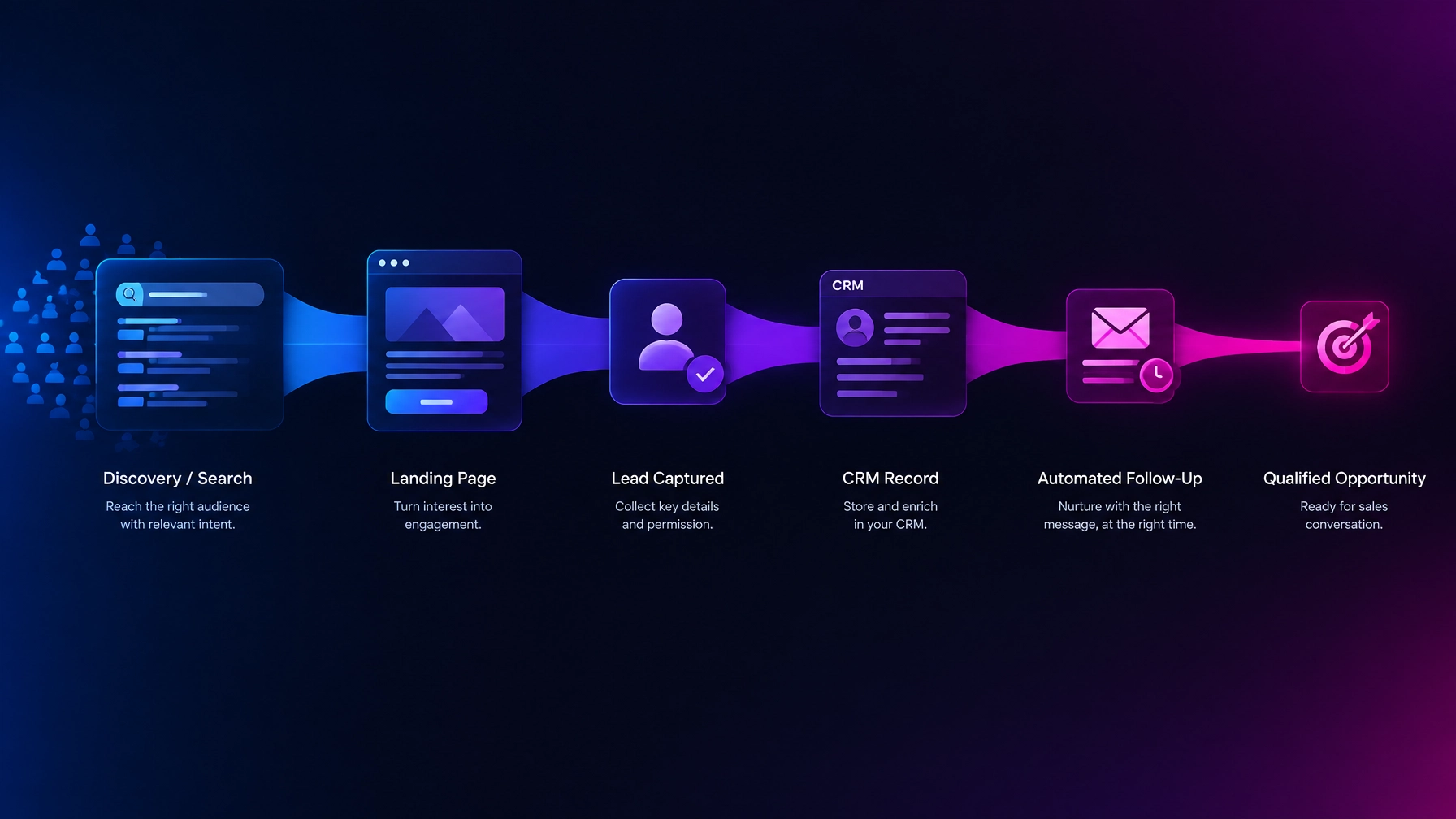
LinkedIn only becomes a growth channel when engagement is connected to a real follow-up system, not left to sit in an inbox. Comments, DMs, and connection requests need somewhere to go, whether that’s a booking link, a lead magnet, or a CRM sequence that nurtures the relationship automatically.
This is where most businesses quietly lose the value they’re generating. Someone comments on your post, you reply once, and the conversation dies because there’s no system tracking the follow-up. A structured CRM management approach closes that gap, so every warm lead gets consistent, timely follow-up instead of falling through the cracks.
Connecting LinkedIn to Your Website and CRM
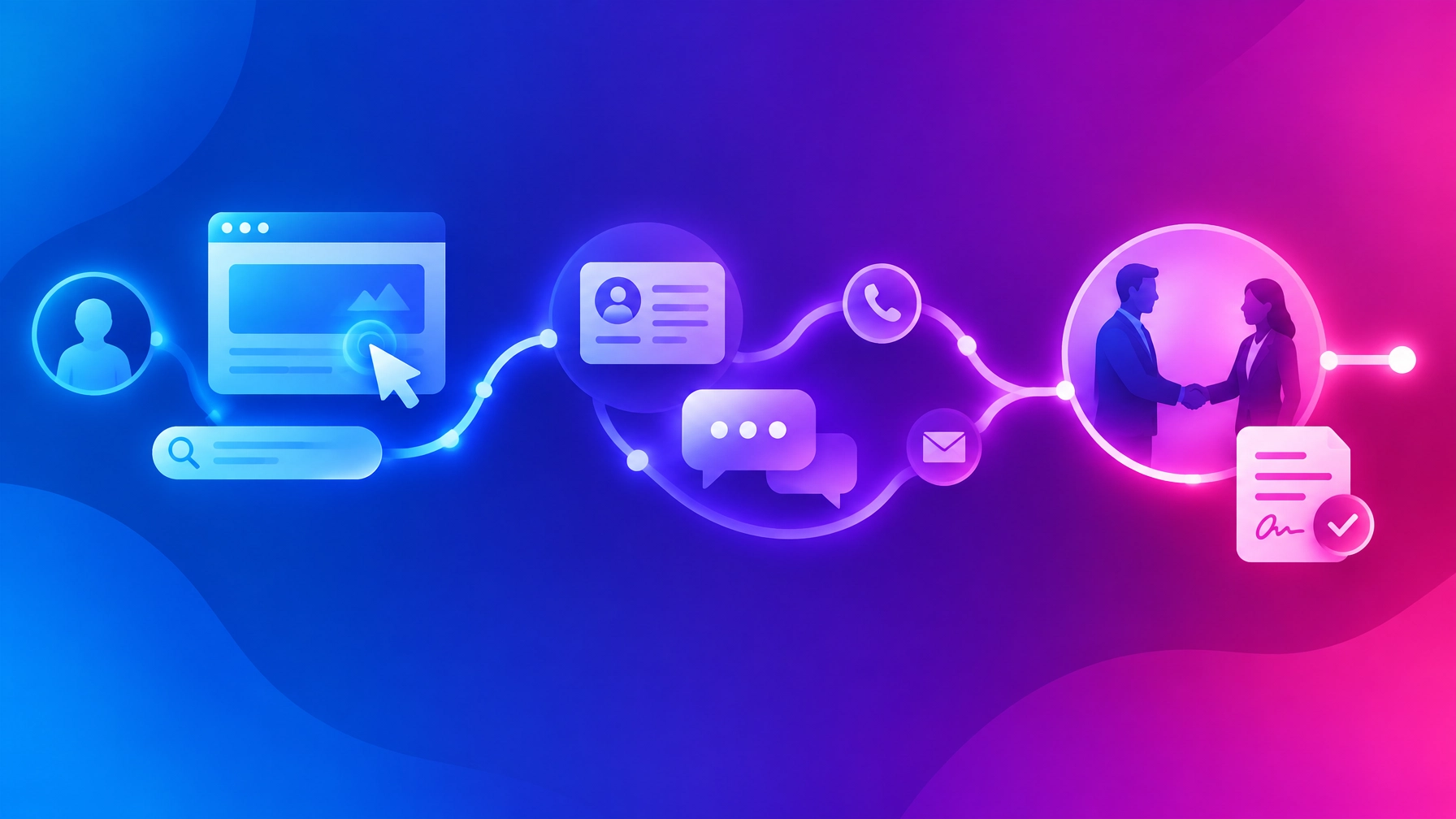
The real growth unlock happens when your LinkedIn profile, website, and CRM function as one connected system rather than three disconnected tools. A visitor clicks from your post to your website, your website captures and qualifies them, and your CRM nurtures them automatically until they’re ready to talk.
Businesses that treat these as separate projects, run by separate vendors, end up with inconsistent messaging and dropped leads. One connected growth system, one strategic partner, solves that structurally rather than patching it after the fact.
AI Search and the Future of LinkedIn Visibility
LinkedIn content is increasingly showing up in AI-generated search answers, which makes answer-optimized writing a growth lever, not just a nice-to-have. As AI tools summarize expertise and recommend people or companies, the businesses with clear, well-structured LinkedIn content are more likely to get surfaced.
This overlaps directly with broader AEO strategy for AI search visibility, since the same clarity and directness that helps a post get cited by an AI tool also helps a human reader quickly understand your value. Writing for humans first, in a way that’s structured enough for machines to parse, is quickly becoming the standard for 2026 and beyond.
Common LinkedIn for Business Mistakes to Avoid
The most common LinkedIn for Business mistake is inconsistency, posting for two weeks, going quiet for a month, then wondering why growth stalled. Momentum on LinkedIn compounds, and long gaps reset the trust and algorithmic favor you’ve built.
Other frequent missteps include over-polished, corporate-sounding copy that reads like a press release, profiles with no clear call-to-action, and ad campaigns pointed at unoptimized pages. Each of these is fixable, but they require someone paying consistent attention, which is exactly where a lot of internal teams run out of bandwidth.
DIY vs. Bringing in a Strategic Partner
Whether to manage LinkedIn in-house or bring in a strategic partner depends on your team’s time, consistency, and how much revenue is actually riding on the channel. A founder with an hour a week can maintain presence, but building a true growth system, content, ads, funnel, and CRM working together, usually requires dedicated expertise.
If your marketing already feels scattered across too many vendors and tools, adding LinkedIn as one more disconnected effort will only add to the noise. This is exactly the kind of fragmented setup a boutique, full-funnel marketing services partnership is built to solve, bringing your content, website, automation, and messaging under one accountable roof.
Frequently Asked Questions
How often should a business post on LinkedIn in 2026?
Three to five posts per week is the sweet spot for most businesses, enough to stay visible and train the algorithm without sacrificing quality. Consistency over a sustained period matters more than any single high-performing post.
Is LinkedIn worth it for small businesses, not just B2B enterprises?
Yes, especially for service-based and local businesses whose buyers research decision-makers before making a purchase. LinkedIn works well anywhere trust and credibility influence the buying decision, which covers far more industries than just traditional B2B.
Should company pages or personal profiles get more attention?
Personal profiles typically drive more engagement and trust because people connect with people, not logos. The strongest approach uses both, a credible company page paired with active, well-optimized founder and team profiles.
How do I know if my LinkedIn strategy is actually working?
Look past vanity metrics like impressions and track profile visits, inbound messages, and booked calls that can be traced back to LinkedIn activity. If engagement is rising but nothing is converting, the gap is usually in the follow-up system, not the content itself.
Do I need a dedicated landing page for LinkedIn traffic?
Yes, sending LinkedIn traffic to a generic homepage significantly underperforms compared to a page built specifically for that audience and offer. A dedicated, conversion-focused landing page keeps the messaging consistent from ad or post through to the final call-to-action.