
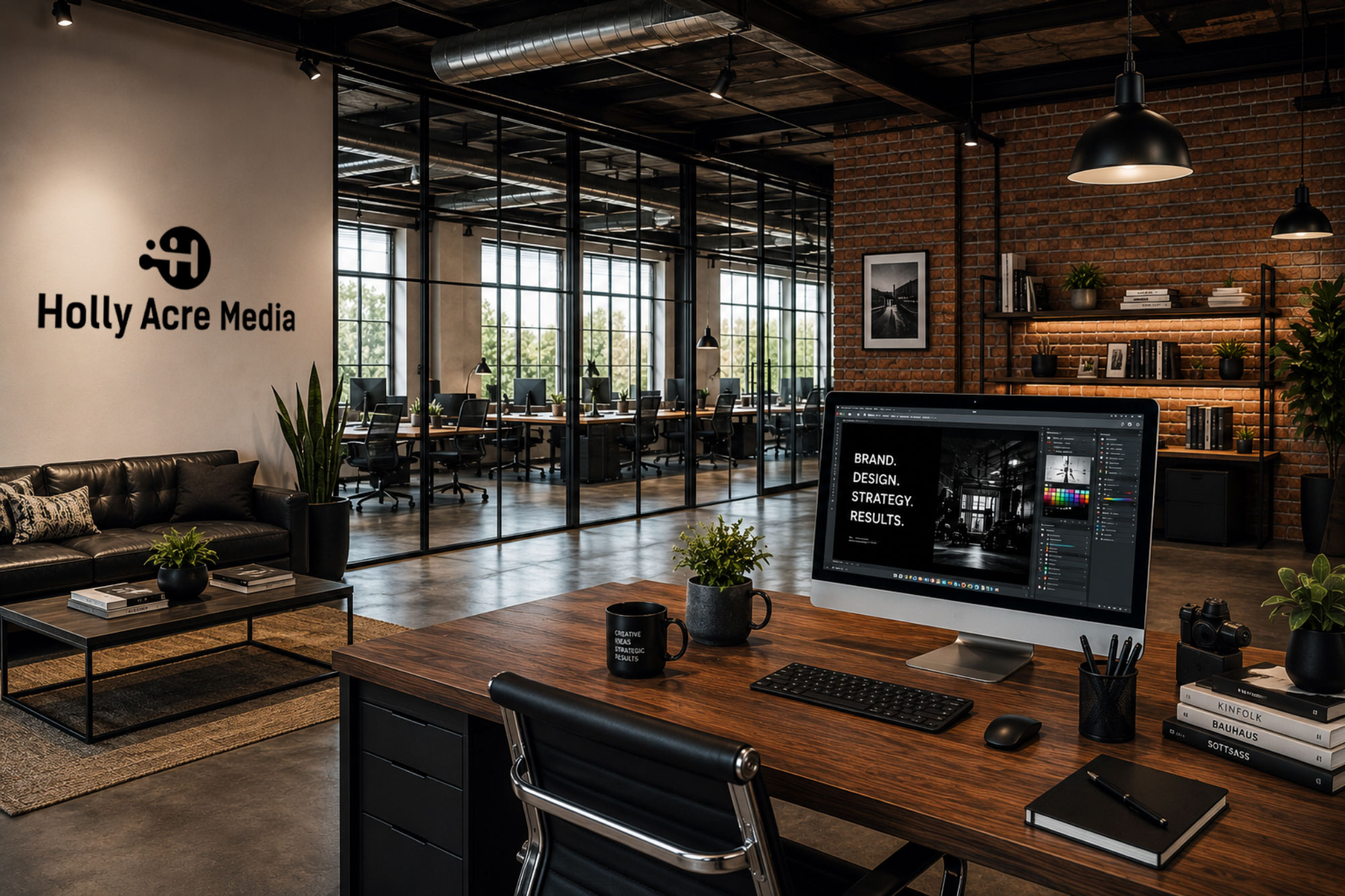


Small business website design in 2026 means building a site around a single job: turning visitors into leads and customers, not just looking good. That requires clear messaging above the fold, fast load times, mobile-first layouts, conversion-focused calls to action, and structure that both search engines and AI answer engines can read. A site that ignores any one of these pieces will look fine and still fail to convert.
What makes a small business website convert in 2026?
A converting website answers three visitor questions in under five seconds: what do you do, who is it for, and what should I do next. Everything else, from color palette to animation, is secondary to that clarity.
Most small business sites fail not because they’re ugly, but because they’re vague. Visitors land on a homepage full of stock photography and generic taglines like “Innovative Solutions for Your Business” and leave without understanding what’s actually being sold. Conversion-focused design strips that away in favor of a specific value proposition, a clear next step, and proof that backs it up.
Clear messaging above the fold
The top of your homepage, what people see before scrolling, needs to state your offer and audience without jargon. “We help Pittsburgh HVAC companies book more emergency calls” converts better than “Comprehensive Home Services Solutions.” Specificity builds trust faster than polish does.
Fast load speed and mobile-first layout
Slow, clunky sites lose visitors before the message even lands. Mobile-first design isn’t optional anymore since most small business traffic now arrives from phones, and Google has used mobile-first indexing for years, meaning it primarily evaluates the mobile version of your site for ranking.
Why does website design matter more for small businesses than big brands?
Small businesses don’t have the brand recognition to survive a confusing website. A visitor who doesn’t recognize your name will judge your entire business based on how your site looks and functions in the first few seconds, and if it feels outdated or unclear, they’ll assume the business behind it is too.
Larger brands can rely on reputation, ad spend, and repeat exposure to earn a second look even when their site underperforms. Small businesses typically get one shot per visitor. That makes design, speed, and messaging clarity a direct revenue lever rather than a cosmetic upgrade.
Key elements of high-converting small business website design
A site built for conversion, not just appearance, tends to share a specific set of structural elements regardless of industry.

A focused value proposition
Every page should make it obvious what problem you solve and for whom, stated in plain language rather than internal jargon. If a first-time visitor has to scroll or click to figure out your offer, the design has already lost momentum.
Conversion paths, not just contact forms
A single “Contact Us” link buried in a navigation menu isn’t a conversion path. Effective small business sites build multiple, low-friction next steps: a click-to-call button, a booking widget, a short quote form, or a chat prompt, each placed where a visitor is most likely to be ready to act. For businesses selling multiple offers or running ad campaigns, this often extends into dedicated high-converting landing pages built around one specific goal instead of trying to serve every visitor with the same homepage.
Trust signals near decision points
Reviews, client logos, certifications, and case studies work best placed right next to the action you want someone to take, not buried on a separate “About” page. A testimonial next to a booking button does more conversion work than the same testimonial on a page nobody scrolls to.
Structured content for search and AI visibility
Search engines and AI answer engines both favor sites with clear headings, direct answers, and well-organized service pages over vague, image-heavy layouts. This is increasingly called Answer Engine Optimization, and it’s becoming as important as traditional SEO for getting found when people ask AI tools for recommendations, a shift covered in more depth in this breakdown of AEO in AI search.
Should you use a website builder or hire a professional?
The right choice depends on your business stage, budget, and how much the site needs to do. A simple DIY builder can work for a solo operator who just needs a basic online presence, while a custom-built site pays off once conversion, integrations, or brand differentiation start to matter.
Website builders like Squarespace, Wix, and Shopify have improved significantly and can be a reasonable starting point for very early-stage businesses with tight budgets. According to Zapier, the best platform depends heavily on your specific needs, whether that’s ecommerce, portfolio display, or booking functionality, since no single builder wins across every use case.
The tradeoff is that templates limit how precisely you can control conversion paths, page speed, and integrations with CRM or automation tools. Once a business depends on its website to generate consistent leads rather than just exist online, custom design and development, or professional guidance on hiring the right developer, tends to close that gap. If you’re weighing that decision, this guide to hiring a web developer walks through what to look for.
When a template is enough
A template-based site is enough when the business has one clear offer, low traffic volume, and no need to integrate with a CRM, booking system, or ad tracking. Think a solo consultant, a local artist, or a very early-stage side business testing an idea.
When custom design pays off
Custom design earns its cost once a business runs paid ads, sells multiple offers, needs CRM integration for lead follow-up, or depends on the site as its primary sales channel. At that point, a few extra percentage points of conversion rate translate directly into revenue, and template limitations start costing more than a custom build would.
How much should a small business website cost in 2026?
Costs range widely based on complexity, from a few hundred dollars a year for a DIY builder subscription to several thousand dollars for a custom-designed, conversion-optimized site with CRM integration. The right number depends less on industry norms and more on what the site actually needs to do for the business.

A basic informational site with a handful of pages costs far less to build and maintain than a site that needs to handle bookings, ecommerce checkout, automated lead follow-up, and ongoing SEO content. Businesses often underestimate the cost of a site that looks fine but doesn’t convert, since that “savings” shows up later as lost leads rather than an upfront bill.
How does website design connect to funnels and CRM systems?
A website that isn’t connected to a CRM or follow-up system is capturing leads and then losing them. Design and infrastructure work together: the site generates the lead, and the CRM makes sure that lead gets followed up with automatically instead of falling into an inbox that never gets checked.
This is where a lot of small business marketing quietly breaks down. The website looks good, the form submits, and then nothing happens for three days because no one saw the notification. A properly connected system routes that lead into automated follow-up the moment it comes in. For businesses unfamiliar with how this piece works, this guide to what a CRM system is explains the basics of organizing leads and customer relationships.
Holly Acre Media builds websites as part of this larger connected system rather than as a standalone deliverable, pairing the site with the CRM automation, messaging, and funnel structure needed to actually convert traffic into revenue. That’s the difference between a website that exists and a website that performs.
Frequently asked questions
How long should a small business website take to build?
A simple template-based site can go live in a few days to a couple of weeks. A custom-designed, conversion-optimized site with integrations typically takes four to eight weeks depending on the number of pages, content needs, and how much strategy work happens before design begins.
Do small businesses really need a professionally designed website?
Not always. A solo operator with one offer and minimal traffic can often get by with a well-built template site. Once the business depends on the website for consistent lead generation, sales, or bookings, professional design starts to pay for itself through higher conversion rates.
What’s the difference between SEO and AEO for a small business website?
SEO focuses on ranking in traditional search results, while AEO (Answer Engine Optimization) focuses on being cited directly by AI tools like ChatGPT, Perplexity, and Google’s AI Overviews when someone asks a question. Both rely on clear structure and direct answers, but AEO puts more weight on content that can be quoted standalone.
How often should a small business update its website design?
Most small business sites benefit from a design review every two to three years, with smaller updates, new testimonials, updated offers, refreshed copy, happening continuously in between. Waiting too long between updates often means the site quietly drifts out of sync with what the business actually sells.
Can a website alone generate consistent leads for a small business?
Rarely on its own. A well-designed website can capture and convert traffic effectively, but it needs to be paired with traffic sources like SEO, ads, or referrals, and a follow-up system like a CRM, to turn that traffic into a consistent, repeatable stream of leads.