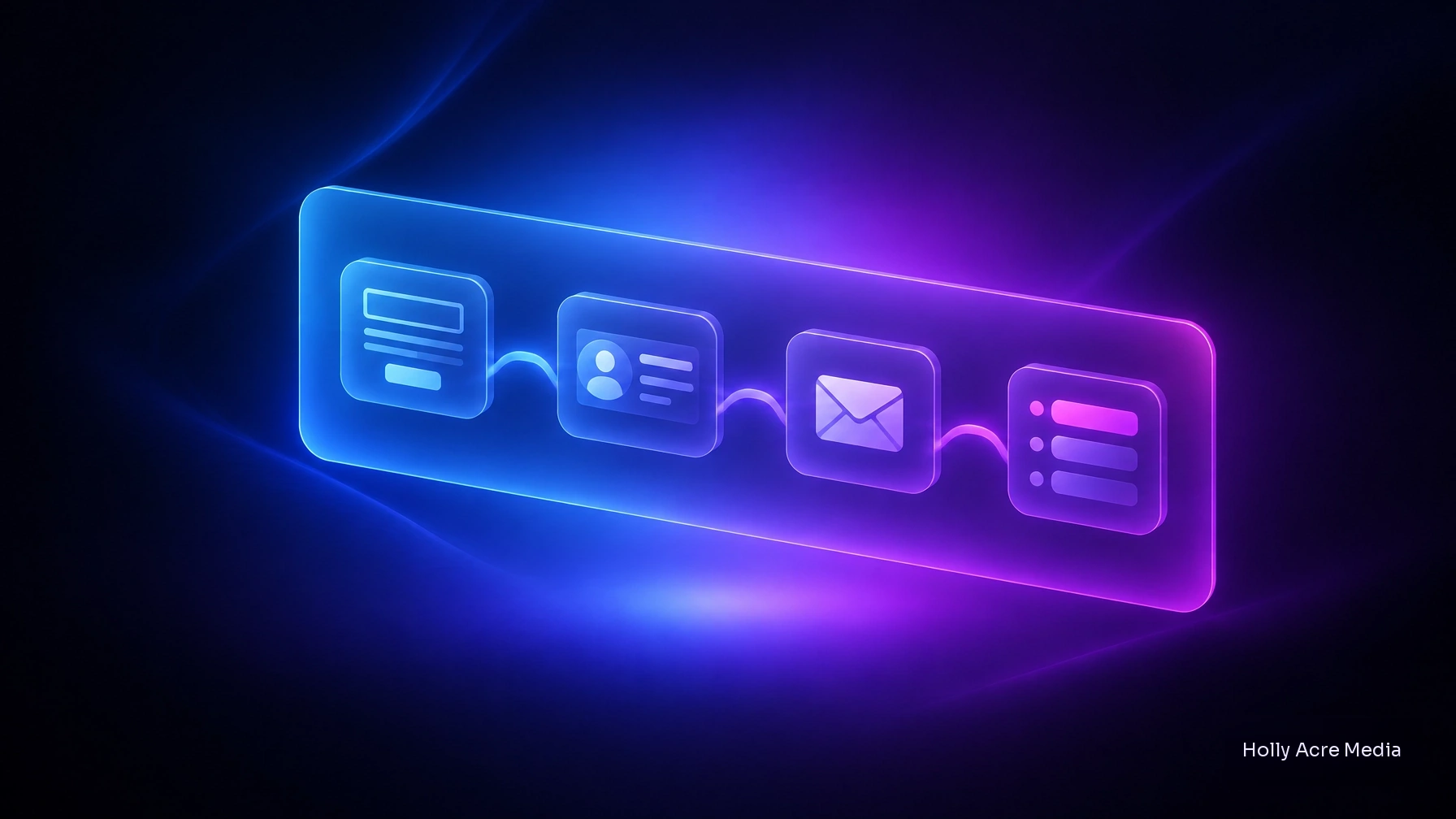



When your marketing funnels are working, the right people understand the offer, take the next step, and receive timely follow-up. When marketing funnels aren’t converting, the cause is usually a break in relevance, clarity, trust, ease, or continuity, not a lack of effort. Find the weakest transition first, then fix the specific barrier.
A marketing funnel is the connected path that guides a person from first discovering your business to taking a meaningful next step. If that path feels disjointed, more traffic alone may not improve results.
Here are ten common reasons a funnel stalls, and a practical way to address each one.
1. The traffic and offer do not match
Visitors may be arriving with a different need or level of readiness than your offer addresses. Someone researching options may not be ready to book a sales call. Someone searching for a specific service may not respond to a general brand message.
How to fix it: Match the page and next step to the visitor’s intent. Review performance by channel, campaign, and landing page. Make sure the promise that earns the click continues on the page.
2. The offer is hard to understand
If visitors cannot tell what you provide, who it is for, and what changes for them, they have little reason to continue. The issue is often not the offer itself, but how it is explained.
How to fix it: State the outcome clearly near the top of the page. Add concise details about what is included, who benefits, and what happens next. Keep supporting information focused on the decision at hand.
3. The page message does not match the visitor’s expectations
An ad, search result, or email may create one expectation, while the landing page leads with something else. That gap can make a credible offer feel like the wrong fit.
How to fix it: Keep the core promise consistent across the full journey. If a campaign offers a specific service, guide visitors to a page about that service, not a broad page that asks them to work out the connection themselves.
For more on the page-level fundamentals, see our guide to high-converting landing pages.
4. There is no clear next step
A visitor may understand your offer and still hesitate if the call to action is vague, difficult to find, or out of step with their intent. “Submit” gives little context. “Request a project review” makes the next step clearer.
How to fix it: Choose one primary action for each page and label it in plain language. Make the action visible, repeat it where it is useful, and tell people what to expect after they click.
5. The form or checkout asks too much
Every extra step asks visitors to invest more time and attention. Some details are necessary, but collecting information without a clear purpose can make a simple decision feel demanding.
How to fix it: Ask only for information your team needs at this stage. Test the form on a phone, make fields easy to understand, and provide clear instructions if something needs correcting. For ecommerce, review the entire checkout, not only the button.
The Baymard Institute’s checkout research reports that 17% of surveyed U.S. online shoppers had abandoned an order because checkout was too long or complicated. That is a useful reminder to examine process friction, rather than assuming every abandoned purchase reflects weak demand.
6. The mobile experience is difficult
A page can look polished on a desktop while making the next step awkward on a phone. Small buttons, hard-to-read copy, crowded forms, and slow-loading elements create avoidable barriers.
How to fix it: Test the full journey on a phone, from the first page view to the confirmation screen. Check readability, button placement, form behavior, page speed, and whether visitors can complete the action without zooming or hunting for information.
7. There is not enough evidence to build confidence
Visitors may be interested but still need reassurance that your business is credible and the offer is a good fit. Broad claims without specific support can leave them uncertain.
How to fix it: Use accurate proof close to the decision point. Depending on your business, that may include relevant testimonials, credentials, process details, case studies, or clear answers to common concerns. Keep evidence specific and verifiable.
8. Important costs or conditions appear too late
When pricing, delivery details, cancellation terms, or other important conditions are unclear, visitors may hesitate or abandon the process once they find out more. In online retail, unexpected expenses are a particularly common source of checkout friction.
How to fix it: Make relevant costs and conditions easy to find before the final step. Explain what is included, what may cost extra, and what customers can expect after purchase. Clear terms support better-informed decisions.
9. Leads are not followed up consistently
A form submission is only the beginning of a customer journey. If it reaches an inbox without an owner, timely response, or clear next action, a promising inquiry can lose momentum.
Mark Lowe, founder of Holly Acre Media, said: “A lead without an owner is not a lead in a system. It is a stranger in a room full of people paid to help.” (Read more about connecting CRM and funnel handoffs.)
How to fix it: Connect forms to your CRM, assign each inquiry, and define what happens after submission. Build in appropriate follow-up and make sure automated messages stop or change when someone replies, books, or becomes a customer.
10. You are measuring a blended number instead of the actual leak
A single sitewide conversion rate cannot explain where visitors lose interest. A page may attract many people with little purchase intent, while a focused campaign may generate fewer but more qualified opportunities.
How to fix it: Track meaningful transitions separately: visitor to inquiry, inquiry to qualified lead, and qualified lead to customer. Segment results by source, device, offer, and funnel stage before deciding what to change.
The Unbounce Conversion Benchmark Report reports a 6.6% median landing-page conversion rate across industries, based on its analysis of 41,000 landing pages. Treat this as context, not a universal target: conversion rates depend on the offer, audience, traffic source, and event being measured.

Fix the journey, not just the page
Conversion rate optimization is the ongoing practice of using evidence to improve the share of relevant visitors who take a desired action. It works best when it considers the complete customer journey, not just button color or page layout.
Work through the repair in four steps:
- Start with the biggest drop-off in the journey.
- Review the visitor’s expectation, the page message, the action required, and what happens afterward.
- Make one focused change that addresses that specific barrier.
- Measure the result against the same audience and conversion event.
A stronger funnel also depends on what surrounds it. Visibility through SEO, AEO, and GEO brings the right people into the journey. A clear website and offer help them take the next step. Connected marketing infrastructure, CRM, automation, and follow-up keep the experience consistent. For the larger role of search visibility across changing discovery channels, read How AI Search Is Rewriting SEO.
Less friction. More clarity. A more dependable path from first visit to meaningful opportunity.
Frequently asked questions
Why are my marketing funnels not converting?
Common causes include a mismatch between visitor intent and the offer, unclear messaging, a difficult form or checkout, insufficient trust, and inconsistent follow-up. Review conversion by stage to find where the journey loses momentum.
What should I fix first in a marketing funnel?
Start with the biggest drop-off in the journey. Identify which audience, page, or step is affected, then test a change that addresses that specific barrier.
How do I know if a funnel is performing well?
Define the conversion event that matters to your business, then compare results across similar audiences, channels, devices, and time periods. Look beyond a blended conversion rate to qualified leads, completed purchases, and follow-up outcomes.
What does conversion rate optimization include?
Conversion rate optimization includes measuring how visitors move through a journey, identifying points of friction, and improving the experience through focused changes. It can involve messaging, page design, forms, checkout, trust signals, analytics, and follow-up.
Can CRM and automation improve funnel conversions?
CRM and automation can support a more consistent handoff by assigning inquiries, recording source information, and prompting timely follow-up. They work best when the offer, customer journey, and ownership rules are clear.