


Influencer marketing has moved past the era of vanity metrics and one-off posts. Choosing the right influencer marketing agency is now a strategic decision that directly impacts revenue, brand equity, and how efficiently your marketing dollars convert into real customers. The right partner brings structure, accountability, and a system built around measurable outcomes. The wrong one brings noise, disconnected reporting, and campaigns that look busy but produce little.
This guide breaks down exactly what to evaluate before signing a contract, so you can separate agencies that create activity from agencies that create momentum.
What Does an Influencer Marketing Agency Actually Do?
An influencer marketing agency identifies, vets, and manages relationships with content creators to promote your brand to their audiences, then tracks the performance of those partnerships against business goals. A strong agency handles far more than outreach and posting schedules. It manages contracts, negotiates rates, aligns creator content with your broader funnel, and ties every campaign back to conversion data rather than just impressions.
The difference between a mediocre agency and a great one comes down to whether influencer work is treated as an isolated tactic or as part of a connected growth system. Influencer content that isn’t backed by a conversion-optimized landing page, clear tracking, and a follow-up sequence is just noise with a nicer face.
Beyond execution, a genuinely capable agency also acts as a strategic advisor. That means pushing back when a creator isn’t the right fit, recommending format changes based on platform algorithm shifts, and proactively flagging when a campaign’s creative direction risks diluting brand positioning. The agencies worth paying for treat your brand’s long-term reputation as seriously as this quarter’s numbers.
Why ROI Should Be the Central Question, Not an Afterthought
ROI should be the central question because influencer marketing is a paid investment, not a branding experiment with no expectation of return. Too many businesses accept “reach” and “engagement” as proxies for success, only to realize months later that none of it moved revenue.
Before hiring any agency, ask how they define and report ROI. A credible agency will talk about cost per acquisition, conversion rate by creator, and lifetime value of customers acquired through influencer channels. If an agency’s pitch leans heavily on follower counts and vague “brand awareness” language without a plan to connect that awareness to your funnel, that’s a signal to keep looking.
The Problem With Reach-Only Metrics
Reach-only metrics fail because impressions don’t pay invoices, customers do. A campaign can generate hundreds of thousands of views and still produce zero qualified leads if the audience, offer, or landing experience isn’t aligned.
This is why the strongest influencer partnerships are evaluated alongside the rest of your marketing infrastructure, including your website and landing pages, your CRM follow-up, and your broader visibility strategy. Influencer content that drives traffic to a page that doesn’t convert is a leak in the system, not a growth channel.
Key Criteria for Choosing an Influencer Marketing Agency
The right agency should be judged on strategic fit, transparent reporting, creator vetting quality, and how well their work integrates with your existing marketing stack. Here’s what to look for in more depth.

Proven, Niche-Relevant Case Studies
Ask for case studies within your industry or a closely adjacent one, because creator dynamics and audience behavior differ significantly across verticals. A beauty brand’s influencer economics look nothing like a B2B SaaS company’s. An agency with only lifestyle or fashion case studies isn’t automatically wrong for you, but they should be able to explain how their process adapts to your specific buyer.
Ask pointed questions: What was the campaign objective? What was the actual conversion outcome, not just engagement? Would they do anything differently now?
Transparent Reporting and Attribution
Transparent reporting means you receive clear, consistent data tying influencer activity to pipeline and revenue, not just a monthly deck of screenshots. Ask what tools they use for attribution, how they handle UTM tracking, and whether their reporting connects to your CRM or analytics platform.
If an agency struggles to explain how they’ll prove results before you’ve even signed, that’s a preview of what post-campaign reporting will look like. Businesses that have dealt with CRM management chaos already know how costly disconnected data becomes down the line.
Creator Vetting and Brand Fit
Creator vetting matters because an influencer’s audience size means nothing if that audience doesn’t trust or resemble your target customer. A rigorous agency screens for engagement authenticity, audience demographics, past brand partnerships, and content quality, not just follower count.
Ask how they evaluate fake followers, engagement pods, and audience overlap across multiple creators in a single campaign. A boutique agency that treats every creator relationship as a considered strategic fit, rather than a bulk-buy transaction, will consistently outperform one optimizing for volume.
Integration With Your Broader Marketing Funnel
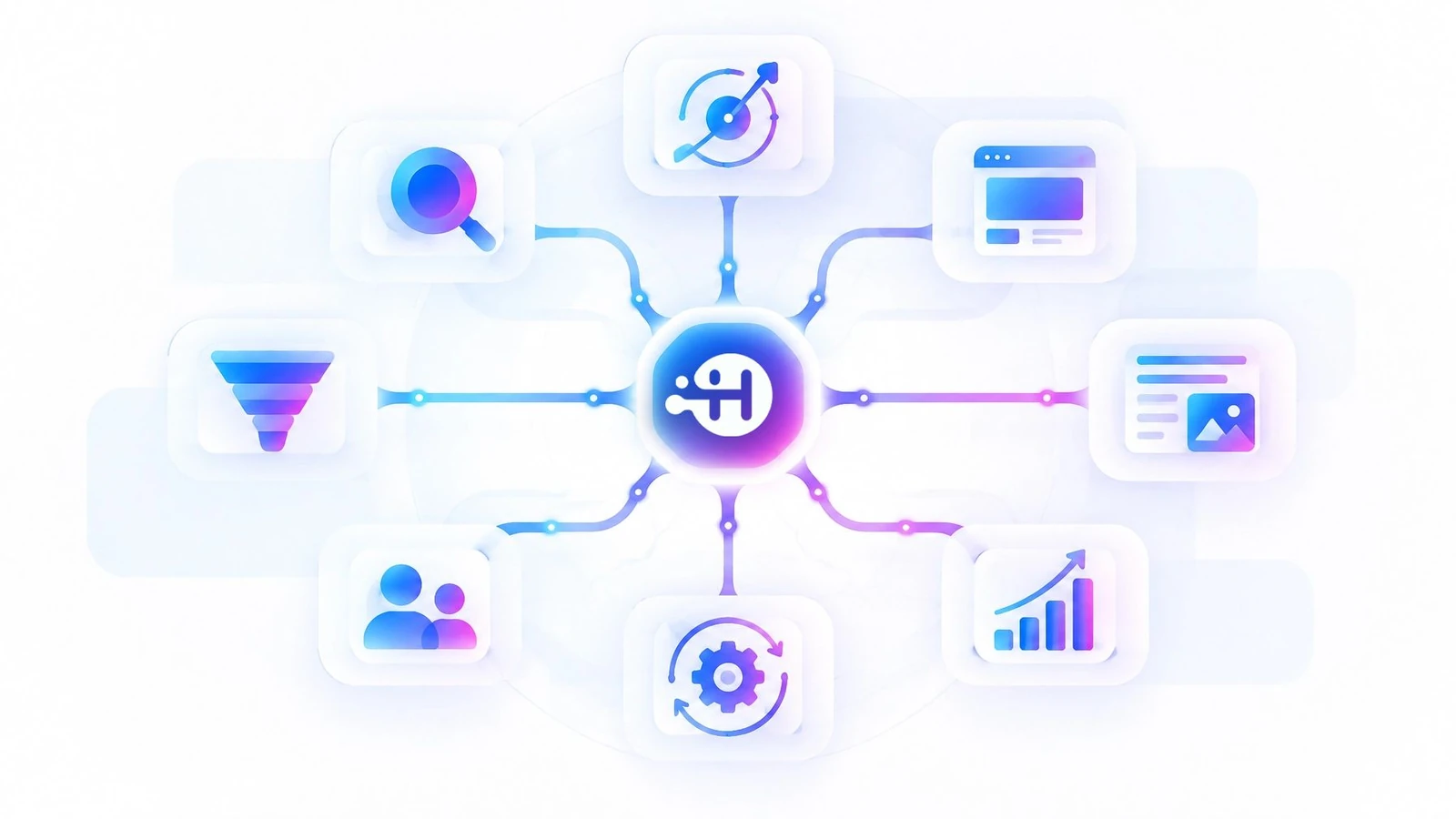
Integration is critical because influencer campaigns perform best when they’re one component of a connected system, not a standalone tactic running in isolation. The strongest results happen when influencer-driven traffic lands on a page built to convert, is captured through reliable automation, and is nurtured with messaging consistent with the brand voice the influencer just introduced.
This is where many businesses hit friction. They hire an influencer agency, a separate web team, and a separate automation provider, and end up with three vendors who don’t talk to each other. That fragmentation is exactly what a unified strategic partner is meant to eliminate. Less noise. More momentum.
Contract Structure and Flexibility
Contract terms reveal a lot about how an agency actually operates. Look closely at whether you’re locked into a long-term commitment before any results are proven, whether deliverables are defined in concrete terms (number of creators, content formats, reporting cadence), and what the exit terms look like if performance doesn’t meet agreed benchmarks.
A confident agency will typically offer a trial campaign or a shorter initial term before asking for a longer commitment. This isn’t just a courtesy, it’s a practical test of whether their vetting, reporting, and creative process actually deliver what was promised in the pitch. Be wary of agencies that require six or twelve-month commitments upfront with no defined checkpoint for evaluating early results, since that structure protects the agency’s revenue far more than it protects your outcomes.
Red Flags to Watch For
The clearest red flag is an agency that can’t clearly explain how they measure success beyond reach and engagement. If pricing, deliverables, or reporting timelines feel vague during the sales process, expect that same vagueness to show up in execution.
Other warning signs include guaranteed follower growth promises, reluctance to share references, pressure to sign long-term contracts before a trial campaign, and an inability to describe their creator vetting process in specific terms. A confident, experienced agency will welcome scrutiny because their process holds up under it.
Questions to Ask Before You Sign
Before signing, ask how success is measured, how creators are vetted, how reporting works, and how the campaign connects to the rest of your marketing. A short, direct list to bring to any discovery call:

- How do you define and report ROI for this specific campaign type?
- What does your creator vetting process actually involve?
- How will influencer traffic be tracked once it reaches our site?
- What happens if a campaign underperforms against agreed benchmarks?
- How does this work integrate with our existing website, CRM, or ad channels?
Agencies that answer these clearly and specifically, without dodging into generalities, are demonstrating exactly the kind of accountability you want in a long-term partner.
Why a Connected Strategic Partner Outperforms a Siloed Vendor
A connected strategic partner consistently outperforms a siloed vendor because growth compounds when every channel reinforces the others instead of operating in isolation. Influencer marketing shouldn’t sit disconnected from your SEO strategy, your paid channels, or the way AI search and answer engines are increasingly shaping how customers discover brands before they ever see an influencer post.
Businesses that treat influencer marketing as one piece of a broader, coordinated growth system, backed by a conversion-ready website, structured automation, and consistent messaging, see far stronger returns than those juggling disconnected vendors with no shared strategy. One connected growth system. One strategic partner. That’s the difference between marketing that looks active and marketing that actually performs.
If your influencer efforts feel disconnected from the rest of your marketing, or you’re managing too many vendors with no unified strategy behind them, it may be time to consolidate under a partner who treats your whole funnel as one system. Explore how a coordinated approach across funnels, websites, automation, and content can turn scattered activity into measurable growth, or reach out directly to talk through where your current strategy is leaking momentum.
Frequently Asked Questions
How much does it cost to hire an influencer marketing agency?
Costs vary widely based on campaign scope, creator tier, and whether the agency also manages content strategy and reporting infrastructure. Smaller, niche campaigns can start in the low thousands per month, while multi-creator, multi-platform programs with full attribution and funnel integration can run significantly higher.
How long does it take to see ROI from influencer marketing?
Most brands start seeing measurable traffic and conversion signals within four to eight weeks, though meaningful ROI trends typically emerge after two to three full campaign cycles. This timeline shortens considerably when the influencer campaign is paired with a conversion-ready landing page and proper tracking from day one.
Should influencer marketing be handled separately from other digital marketing?
No, influencer marketing performs best when it’s integrated with your website, SEO, and automation strategy rather than managed as an isolated tactic. Disconnected efforts lead to inconsistent messaging and lost data, while a unified approach lets every channel reinforce the others.
What size business benefits most from working with an influencer marketing agency?
Both local and global brands benefit, provided the agency’s approach scales to match the business’s stage, from foundational campaigns for growing founders to complex, multi-offer engagements for established teams. The key factor isn’t company size, it’s whether the agency’s process matches the complexity of the brand’s existing funnel.
How do I know if my current influencer strategy isn’t working?
Warning signs include strong engagement numbers with little to no measurable increase in leads or sales, inconsistent messaging across creators, and reporting that never ties back to revenue. If influencer activity feels busy but disconnected from actual business outcomes, it’s a sign the strategy needs closer integration with the rest of your marketing system.